

Crisis-support training platform
Implemented pre-revenue voice and text practice platform for crisis-support training.
Asset typeSoftware IP Asset
AI-assisted voice and text practice for crisis-support training
CallCraft is a pre-revenue software IP asset that combines an implemented training platform with a versioned scenario library, simulated caller personas, structured coaching reviews, supervisor-facing reporting, and organizational administration.
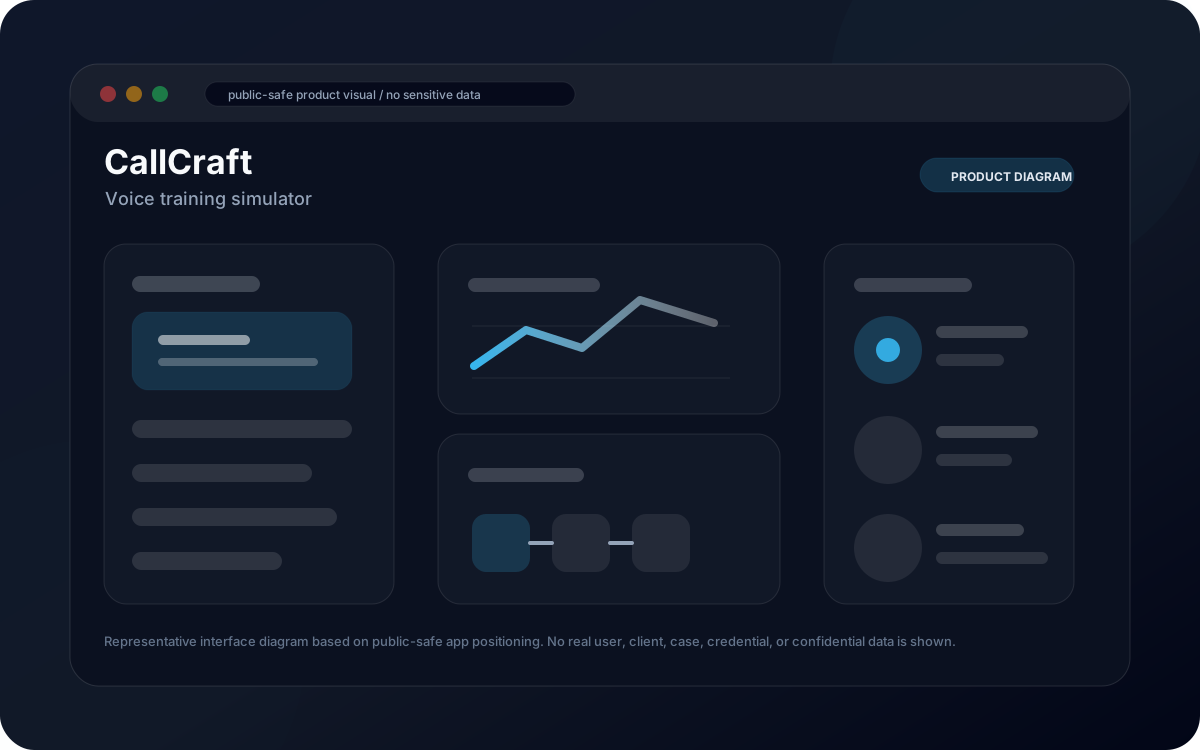
Implemented pre-revenue voice and text practice platform for crisis-support training.
Asset typeGeneral commercial structure.
Deal structureCategory-level description only.
Technical overviewHotline networks, DV/SA coalitions
Best fitPublic access does not imply self-service materials.
Access postureMaterials are shared outside NPS after owner approval.
Next stepProduct at a glance
Product stage
Implemented pre-revenue platform
Revenue
Pre-revenue — no revenue represented
Availability
Private demonstration & diligence
Transaction
Acquisition or licensing under consideration
Market context
Crisis-support organizations often rely on peer role-play, trainer availability, and manual review. CallCraft is designed to make structured practice more repeatable by giving trainees fictional scenarios, voice or text interaction options, reviewable transcripts, and draft coaching material that supervisors can use in training conversations.
The platform does not replace instructors or determine whether a participant is ready for live service. It gives training teams a reusable technical and content foundation that they can review, adapt, validate, and operate within their own training model.
Workflow
Select a fictional scenario by skill focus, difficulty, and estimated duration.
Complete a structured voice or text session with a simulated caller persona.
Examine the transcript, draft coaching notes, strengths, growth prompts, and practice priorities.
Use session history, reports, and administrative views to support trainer-led review and follow-up practice.
Implemented scope
9 versioned fictional scenarios across onboarding, supportive response, and high-risk practice.
Dual interaction modes using simulated caller personas and real-time audio processing.
Draft coaching signals, skill visualizers, and client-side PDF performance reports.
Interface previews
Previews use demo, redacted, or representative content so buyers can inspect the interface without exposing sensitive data.
Illustrative product view using fictional sample data. The app contains a browsable, categorized training library.
Evidence and diligence posture
This page provides a limited public overview and a controlled path for further inquiry.
Public pages provide buyer-centered positioning, fit, use cases, and a controlled next step without implementation details.
A private walkthrough can be requested for qualified review. No public demo access is implied.
Material representations remain subject to verification during controlled review.
Details beyond this public overview are not included in the public portfolio payload.
Public pages are designed for discovery: product overview, use case, high-level features, category, and public-safe readiness summary. Additional representations and supporting material are considered selectively after review.
Use cases
Give new crisis-support staff and volunteers repeated practice before they handle real calls.
Use structured transcripts and draft coaching notes to guide training review conversations.
Rehearse complex or high-risk conversation patterns in a controlled environment.
Establish consistent practice scenarios and scoring frameworks across member hotline teams.
From the blog
Next step
Contact us to discuss the product and an appropriate next step.
Related assets